 BUY
Understanding Guide Numbers for Speedlights and Flash
Guide Numbers (GN) are something which are often thrown around when discussing speedlights and flash, however their meaning and use are rarely understood. GNs were essential in the days of film where we couldn’t see the end result of an exposure and had to be sure of its accuracy before the image was captured.
In the simplest sense, a GN is used as an indicator of flash power, with a higher number meaning a more powerful flash. The reality of the situation however is the numbers can often be misleading and difficult to comprehend. The number itself derives from a simple mathematical equation that states:
Guide Number = Subject Distance from Flash × f-stop
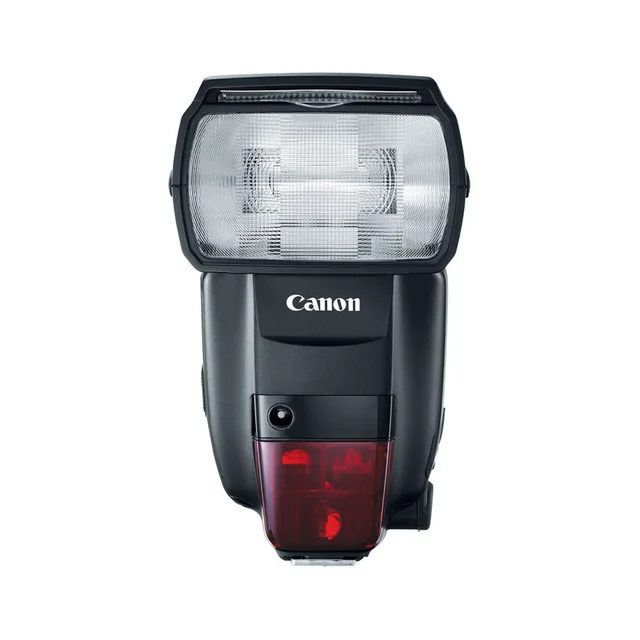
Take the Canon 600EX II-RT for example. Canon states that this has a maximum GN of 60m at ISO 100 and 200mm flash coverage. Flash coverage refers to the angle of the beam of light, alternatively called the flash ‘zoom’. This typically matches the focal length we’re shooting at—we can imagine that we’ll need less flash coverage when we’re zoomed in with our lens, as we are capturing a narrower angle of view or more flash zoom. Most modern flashes will adjust for this automatically, however it can also be controlled manually if the shooter desires.
Manual Control: A little unorthodox
As controlling these two things separately is a little unorthodox and results in an uneven distribution of light across the frame, let's reduce one variable and assume the flash zoom automatically adjusts based on focal length. If we’re shooting at a focal length of 200mm, a matching flash zoom of 200mm and an ISO 100, our subject would be correctly exposed at full flash power using a Canon 600EX II-RT with the following subject distances and f-stops:
- 21.4m at f/2.8
- 15m at f/4
- 10.7m at f/5.6
- 7.5m at f/8
- And so on...
This information isn’t super useful as we would rarely compose a shot and choose an aperture this way. We also don’t always need to have our flash set to full power.
The typical way
A more typical way of working would be to:
- frame a shot first
- adjust the aperture to taste
- and then alter the power of the flash to give us the correct exposure.
We can also use GN to work this way, as long as we know what the GNs are for varying focal lengths. Luckily, for the 600EX II-RT, Canon provides a complete GN table which shows the guide numbers at different focal lengths/flash zooms.
The first thing we can see is that the GN increases as the flash zoom increases. This is because the narrower the flash beam, the brighter the light becomes as it is condensed into a tighter area. From this point the guide numbers can be used to work out the correct flash power for a given subject distance and f-stop by doing a bit of arithmetic.
Working with an example
- We are using a Canon 600EX II-RT
- Our lens focal length is 80mm
- Our flash zoom is also 80mm
- Our subject is standing 3m away
- The flash Guide Number is 49 at 80mm
Plugging these values into our formula:
Guide Number = Subject Distance From Flash × f-stop
49 = 3m x f-stop
49 / 3 = 16.3
Lets round the f-stop down to f/16 for simplicity's sake. After using this formula, we now know that at full flash power, a flash zoom of 80mm, an ISO of 100, a subject distance of 3m and an aperture of f/16, our subject will be properly exposed. What if we don’t want to shoot at f/16 however? We can’t stop down the aperture, as we are already at our maximum flash output, but we can open it up.
Controlling the aperture, first
Say we want a blurry background, so we want to open the aperture up to f/2.8. This aperture will let in 5 stops more light than f/16, so we want to reduce the flash power by 5 stops as well to maintain a correct exposure. This would mean using a flash power of 1/32. We can extrapolate this information for flash power at any point of the aperture scale:
Aperture — Flash Power
f/16 — 1/1
f/11 — 1/2
f/8.0 — 1/4
f/5.6 — 1/8
f/4.0 — 1/16
f/2.8 — 1/32
f/2.0 — 1/64
f/1.4 — 1/128
The issue of using Guide Numbers
The issue of using GNs however, is that tables like the one provided for the Canon EX600 II-RT are more and more rare. Often we are only given one GN in a spec sheet, and sometimes the focal length related to the GN isn’t even stated (although generally we can assume it will be at its most zoomed point, where the flash will be most powerful). You could measure and document the GNs yourself using a light meter, but light meters are also less common in a world of digital cameras.
Another unfortunate truth is that the information that is given to us by a manufacturer is rarely consistent across the different flash models within a brand, let alone between the brands themselves. Trying to compare guide numbers as a measure of flash intensity quickly becomes a problem of comparing apples and oranges.
If you are wanting to compare flashes and Guide Numbers, such as when trying to decide what flash to purchase or hire, the best you can do is try and find it’s GN table, and from there compare the values for a constant set of flash zooms. The best place to look for this is often the specifications section of the flash’s manual. If you can find these, then you can work with the formula to make a direct comparison, but if you can’t find them, or they are inconsistent, you are doomed before you start.
What’s going to be practical?
From a practical standpoint, you can see that using GN is a pretty time intensive process. You need to have access to the GN table, have it memorised or written down, and then do the calculations in a timely manner before your subject begins to grow impatient. GNs were essential in the days of film, where we couldn’t see the end result of an exposure, so we had to be sure of its accuracy before the image was captured. However with digital cameras you are better off just using through-the-lens metering (TTL), or taking photos with your flash set to manual and adjusting the power based on what you see. Why manufacturers still insist on using GNs as the defining measure for speedlights is anyone's guess, but they seem to be designed to trick and confuse prospective buyers rather than providing any information of substance.